
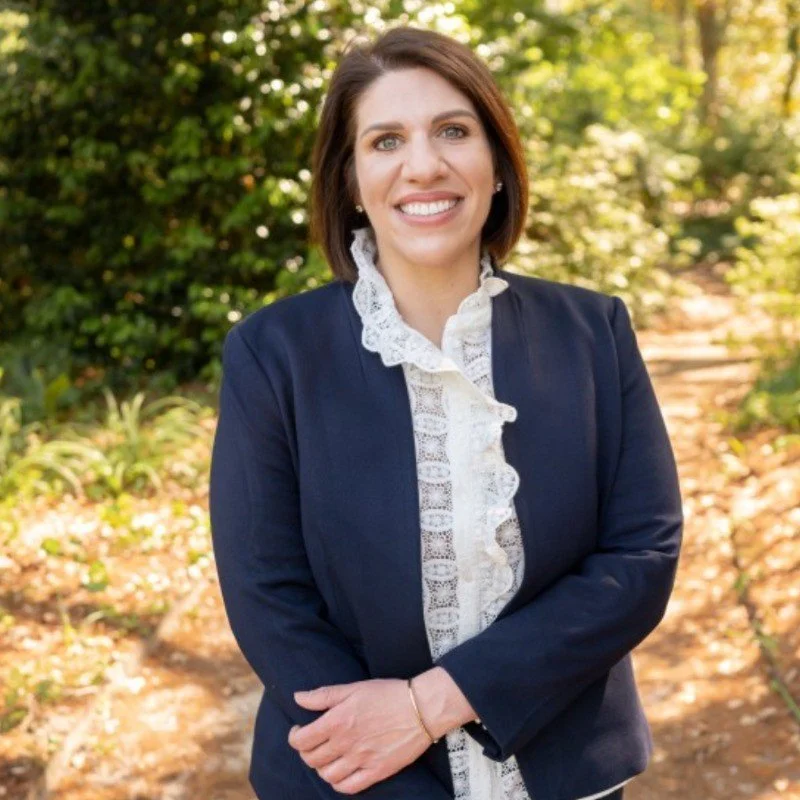
My name is Abby Pollander. I am a pharmacist at the Medical University of South Carolina and I serve as the drug shortage coordinator. I lead drug shortage forecasting, recall management, and operational planning. I have a background in emergency medicine and critical care which has given me a very strong lens on critical medications, mass casualty response, and frontline needs. I partner with Angels for Change and Laura Bray. Being part of this community that rallies around drug shortage prevention and activism informs my determination and motivation every single day.
I started in my role as drug shortage coordinator on the first day of the IV fluid shortage in 2024, it has really been trial by fire. Managing that shortage was unprecedented. We were unprepared for something to affect every aspect of patient care and for a shortage of this scale to go on for an indeterminate amount of time. With some drug shortages there’s a very light line in the sand or a date that’s put out there for when the shortage will end, but with the fluid shortage we were operating with very little information.
In pharmacy we try to be lean, make sure we’re decreasing our spend, and make sure you only buy what you need. But the IV Fluid shortage affected so many areas in so many parts of the country for so long, it has really changed how we manage health care and our supply chain. Now we try to balance buying what you need with preparing for the next time something happens. So it’s definitely something that will stick with us for a very long time.
What I learned very early on was that collaboration and connections go a long way. So though we were able to get a good handle on our fluid shortage internally it still wasn’t enough. I began looking for partners to work with to find fluids for our patients. In that search, I found Angels for Change.
I ended up reaching out to Laura asking for help finding hypertonic saline. It was something we had on our drug shortage radar but we had a very high uptick in our use from unexpected patients and she was able to connect me with emergency supply from their Global Supply Sharing Network (GSSN) who was able to very quickly deliver this product to us for patients in need. I also worked with her for help with a pediatric outpatient medication. They were able to overnight the medication the very day which allowed us to deliver and dispense it to the patient the next day, keeping the patient on protocol.
The experience with this Angels for Change hotline has really transformed everything. In this space hoarding and hiding is what we’ve been trained to do. We are taught very early on to squirrel stuff away and not tell people what you have. Knowing that there are partners out there willing to help you makes you consider, well, I’m willing to help people too. I know how hard this role is and how much it can negatively affect patients. I think being transparent with saying I have x-number of days supply left and offering to help others is something that can go a long way in this space because we’re all dealing with the same things. We don’t need to be working in a silo.
The Angels for Change Hotline has really transformed everything for our pharmacy and patients. It has shown that shifting from a hoarding and hiding mentality to transparency, stewardship, trust, and collaboration will ultimately aid in moving the needle to end drug shortages. I fight this battle every day to make sure that patient care is not interrupted and it’s very helpful to have Angels for Change and Laura in our corner.
After attending Summit One and hearing the patient stories as well as hearing from other Change Makers I’ve never felt more motivated to advocate for ending drug shortages. I think it’s very easy to think of this role as a day to day battle but we really need to partner together just as Laura is doing to make sure that we can ultimately achieve that goal. So I’m very grateful to stand with Angels for Change and share my shortage story.